What is changing on the appliance—and at the scene?
Fire trucks, specialist vehicles and field equipment, read through the practical questions they raise for crews and the buildings they protect.
FLEET / EQUIPMENT / FIELD USE
New capability needs a usable site picture.
Browse dated service releases and manufacturer announcements. Delivery, order, trial and operational use are labelled separately. Every entry links to its source and a question BCAM would carry into the building or response record.
FIRE SERVICES / OPEN THE VEHICLE
The truck is a system, not a headline.
Choose a component family to see why it belongs in the building or operational record.
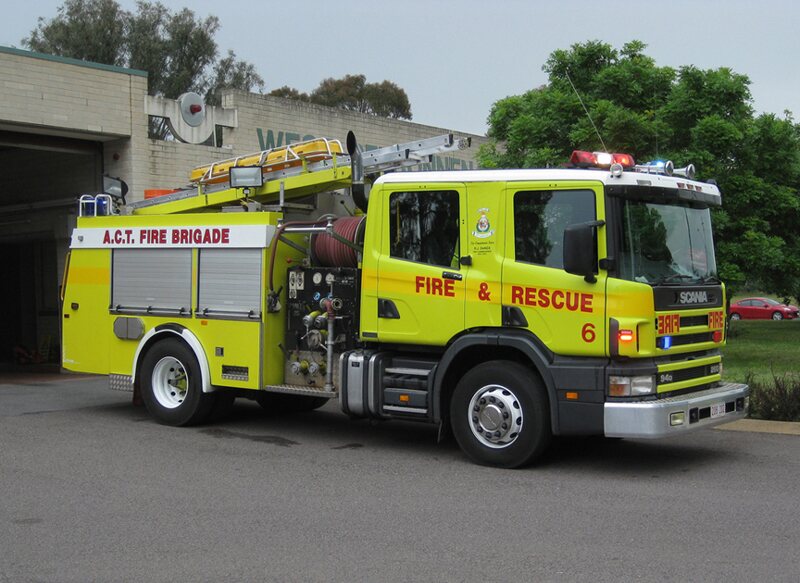
A photographed ACT Fire Brigade Scania P94 urban pumper, Canberra, 2010. The illustration below is a general teaching aid, not a cutaway of this vehicle. Photo: Angelo Tsirekas / Wikimedia Commons · CC BY 3.0. Framed for layout.
01 / COMPONENT FAMILY
Chassis and cab
Crew protection, manoeuvrability and access affect the operational setting.
THE BCAM CONNECTION
BCAM’s responder brief supplies current building context. The vehicle’s actual specification belongs to its manufacturer and service.
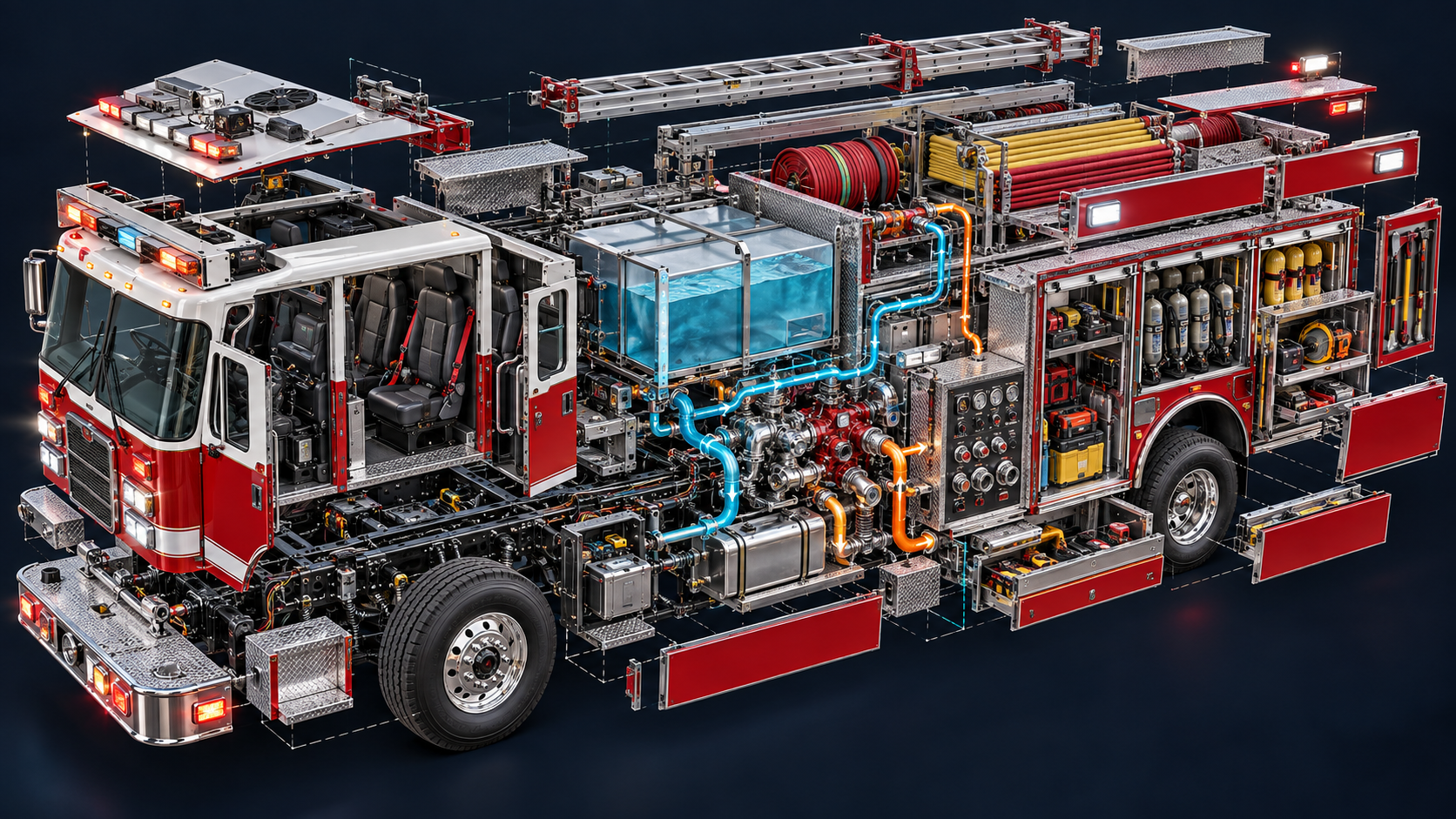
Open the illustrative component viewIllustrative pumper anatomy. The vehicles reported below are actual photographed models with their own specifications.
REAL VEHICLES / REAL EQUIPMENT
The machines behind the story.
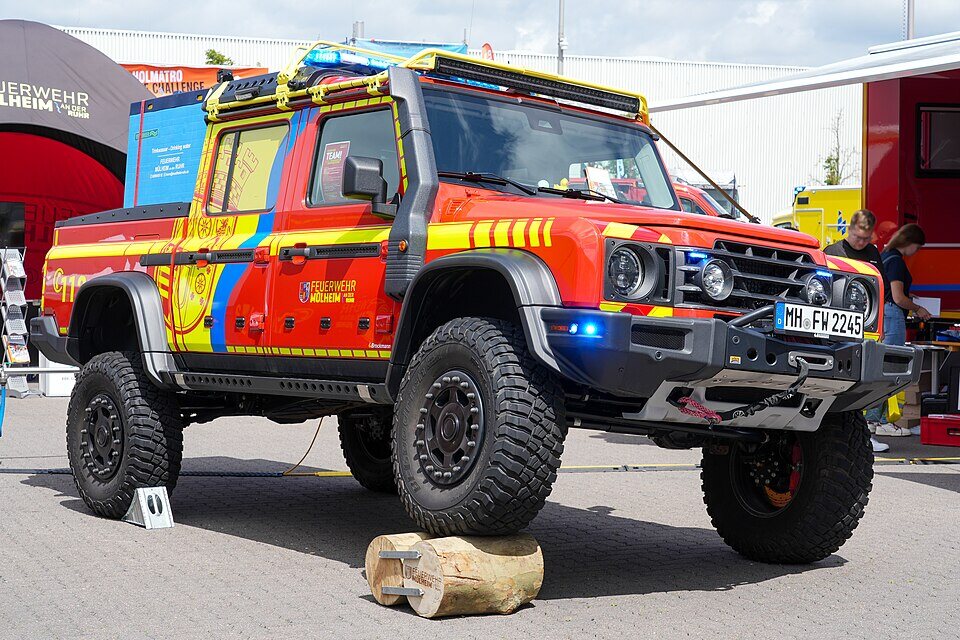
Photographs of actual vehicles and equipment. Each caption identifies what is pictured; a model example is never presented as a photographed delivery from a different brigade.
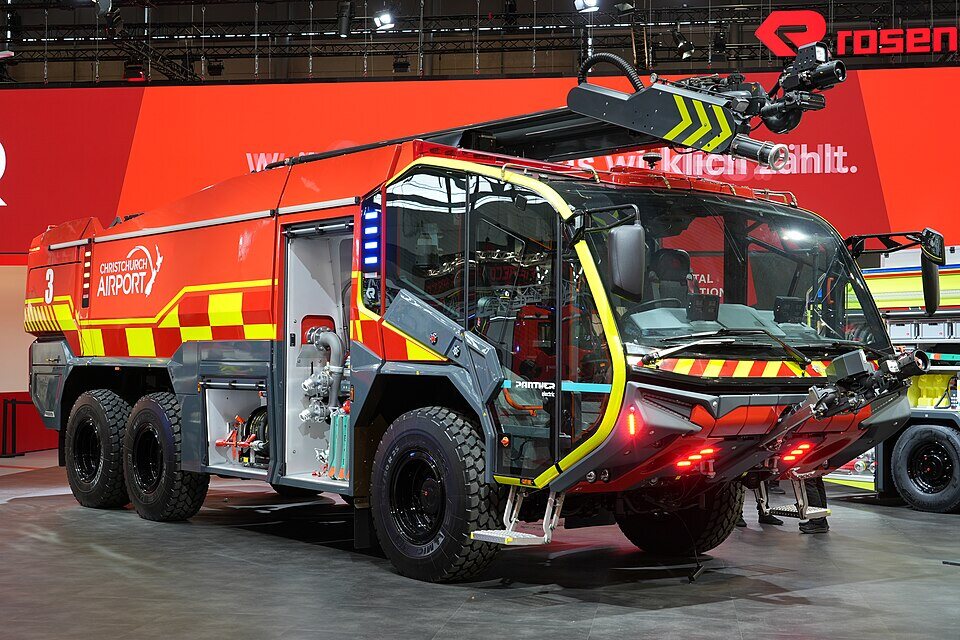
AIRPORT / NEW ZEALANDChristchurch Airport electric Panther 6x6
Actual airport vehicle photographed at INTERSCHUTZ, June 2026. Display does not establish operational deployment.
Recent equipment and vehicle headlines from official brigade and manufacturer pages. These links are discovered automatically; follow the source for the full account.
Headlines are filtered by topic and age; inclusion does not mean BCAM has verified a manufacturer claim or operational deployment. Source pages can change. Checked timestamps describe this site’s most recent request, not a continuous dispatch service.
9 source-linked reports · reviewed 29 September 2026
01AUSTRALIA / REGIONAL URBAN
Delivered; crew familiarisation
One pumper, several response settings
Fire and Rescue NSW reports a new CAFS Class 2 pumper at Wingham for structural, chemical, petrol and grass fires. The service says its crew will familiarise and test the vehicle before operational use.
THE BCAM QUESTIONAre the building access, hydrants, hazards and fire-system interfaces in a form a mixed-response crew can use?
Rosenbauer reports U.S. Navy orders for ten medium-duty rescue vehicles, scheduled for delivery in fall 2027. An order is a procurement milestone, not a claim that these vehicles are already on station.
THE BCAM QUESTIONWhat verified facility and hazard information travels with a crew moving between installations?
Fire and Rescue NSW reports that a remotely piloted aircraft helped locate two missing hikers near Dead Horse Gap. Software identified a possible target; the thermal camera and operator confirmed the location before ground crews reached them.
THE BCAM QUESTIONWhen aerial observations are used in a building incident, how are the images, location, time and human confirmation handed into the incident record?
Rosenbauer reports delivery and in-service training of King Cobra aerials for Canmore and Gimli in May. The two communities have different response settings, despite sharing the same vehicle family.
THE BCAM QUESTIONHave aerial set-up areas, obstructions, access routes and building heights been checked against the actual site?
Rosenbauer and MAN presented the L32A-XS electric ladder on an eTGM chassis, with a declared gross weight below 16 tonnes. The manufacturer described a handover to the NRW Fire Department Institute at INTERSCHUTZ; this is not evidence of general fleet deployment.
THE BCAM QUESTIONDo access loadings, narrow streets, overhead obstacles and appliance positioning remain current in the building plan?
Rosenbauer reports delivery of a Universal Firefighting Vehicle to Covestro’s Brunsbüttel plant brigade. Its water and foam capacity, monitors and rescue equipment reflect the industrial site and its water network.
THE BCAM QUESTIONWhich site hazards, water supplies, routes and access constraints shaped the specification?
Twenty-six airport vehicles, two turret configurations
Rosenbauer reports a Dutch Ministry of Defence order for 26 PANTHER 6x6 vehicles through partner Kenbri. Seven were specified with high-reach extendable turrets and 19 with roof turrets; delivery and operational commissioning are separate steps.
THE BCAM QUESTIONHow do the airfield plan, water and agent replenishment, aircraft types and training change for each configuration?
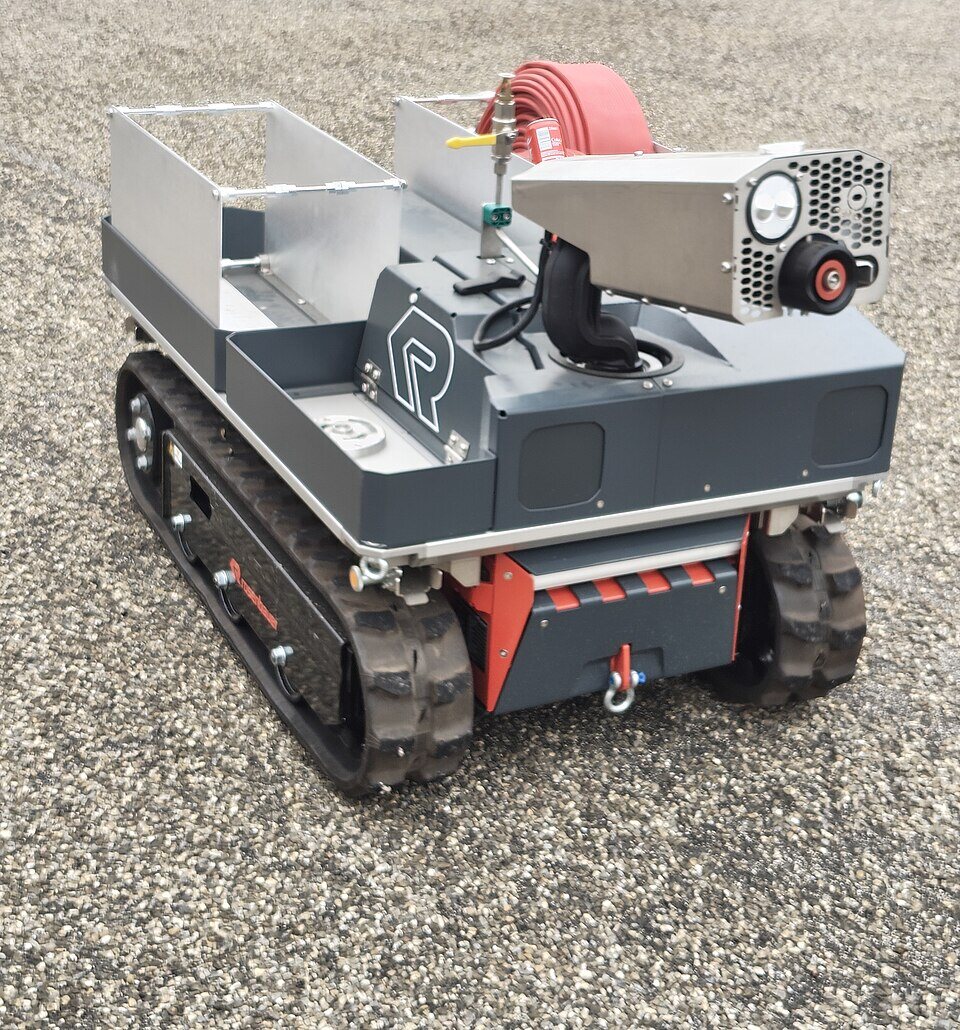
Rosenbauer describes a Twente brigade pilot using an RTE Robot AX for reconnaissance and firefighting support. A trained three-person team operates it; the service is evaluating its operational value over three years.
THE BCAM QUESTIONCan plans identify where remote equipment can enter, what it can observe and which hazards still demand human assessment?
Rosenbauer announced seven fourth-generation PANTHER 6x6 vehicles for Athens International Airport to replace vehicles dating from 1998. Three were specified with high-reach extendable turrets and four with roof turrets.
THE BCAM QUESTIONWhat has changed in the airport estate, aircraft mix and emergency access since the previous fleet was specified?
The relevant service and authority determine operational requirements. BCAM’s role is to maintain a dated, accountable building record that can be shared through an agreed process.
Editorial review: 29 September 2026. Manufacturer claims are attributed, and procurement is distinguished from service deployment. The fleet desk checks source headlines on visit; this page is not an operational response guide.